Happy Birthday America!!!

Have a Great 4th of July!!!

We wish you and your family a very Happy and safe Independence Day!!!

Enjoy!

General Steel


A Good Roof Over Your Head (part 4)

(concluded from previous post … )


A Good Roof Over Your Head (part 3)

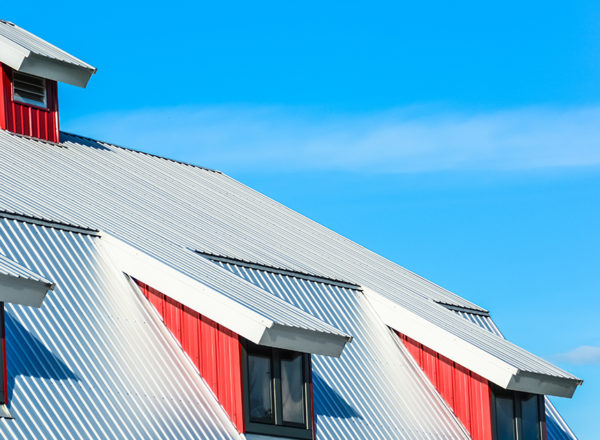
(continued from previous post … )Another advantage of using a steel roof is the ease at which it can be put on top of the existing building. Yet, this is not a case of haste making waster. To the contrary, this is a matter of saving time so you can save money. All the while, safety is never compromised one iota. Indeed, by using a steel roof you’ll avoid the safety and integrity problems common with traditional building roofing systems. The need for repairs on a steel roofing system is just about non-existent (not to mention the need for general maintenance).


A Good Roof Over Your Head (part 2)

(continued from previous post … )

Everyone wants a good roof over their head. No one wants to be rained on. But, don’t assume that all roofs are created equal. Having a roof that you can depend on to keep you warm and dry inside depends on its design and installation (not to mention upkeep and repair). The best material to use in constructing your roof is steel. The steel roofs that General Steel provides will be able to meet the necessary design and building code requirements. What kind of roof do you need? Do you need to have the options of mansards or parapets, or a low profile as well as a high slanted roof? Whatever your needs, check with The General and we’ll be happy to process your order.


A Good Roof Over Your Head (part 1)

What’s a building without a roof? You want a roof that will not only keep out the rain, but keep the inside air inside and the outside air outside. Is this possible? Well, of course. However, it is usually not as simple as you think to pick the right material and design method for your rooftop. There are some important factors to consider first. Many builders who want the best for their project (and not to mention wanting to comply with building code) will invest in a pre-engineered steel roof.

(to be continued …)


Unshakable Buildings (part 7)

(Concluded from last week …)

It is important that you research your local building codes and regulations prior to purchasing a pre-engineered steel building. Codes vary from location to location, as one area may be more prone to strong winds while another may be more likely to suffer earthquakes. Invest in the highest quality designs so that your building will endure the most destructive of any natural forces.


Unshakable Buildings (part 6)

(Continued from last week …)

In steel building construction, temperature loads are important to note as steel will expand and contract as the ambient temperature fluctuates. Heat and cold loads, arguably, are determined by the building use, climate, and level of insulation. It may not be so important to calculate the correct thermal loads for buildings that are smaller, buildings in temperate climates, or climate controlled structures. Where there are changes in seasonal climates, and also for unheated single story steel buildings with expansive clear-span capability, however, it may be imperative. Thermal shrinking due to cold weather, as an example, may damage welds and bolts of pre-engineered steel structures. If there can be an increase or decrease of 50 degrees Fahrenheit from the most conceivable temperature at the time of the building’s erection, then cold and heat loading estimates should be considered in steel building designs.


Unshakable Buildings (part 5)

(Continued from last week …)

Ductility, or the ability of the structure to have vital reinforcing components deform but not break, is an approach that 21st Century structure design implements to increase seismic resistance. Ductility is vital where local building regulations cover seismic activity. The correct applications of seismic codes should help any structure to endure strong earthquakes without structure collapse; endure moderate earthquakes without significant structural damage; and endure small earthquakes with no damage at all.

(to be continued next week …)


Unshakable Buildings (part 4)

(Continued from previous post …)

The intensity to which seismic action can strike a building is brought about for many reasons. The type of soil that the building sits upon is relevant. There is an increase of seismic shock effects on a steel structure built on particular soils. Structure rigidity is another aspect. Engineered counteraction to any seismic action is critical for any structure’s endurance involving the lateral load resisting features that have been fabricated into the steel building.

(to be continued next week …)


All our buildings are built to your specifications and to your satisfaction. Call us now to get started.


Unshakable Buildings (part 3)

(Continued from previous post …)

Earthquake momentum is carried by the inertia of a building that is not susceptible to any surface agitation, says another theory. The lower portion of the building moves with the ground as it begins to move away from the structure, but inertia holds the rest of the building in one spot for some time. The more weight to the structure, the more substantial the seismic force that acts upon it.

(to be continued next week …)


What other questions do you have? Give us a call now and we’d be happy to answer them.